SELECT
    journal_voucher_id,
    company,
    voucher_type,
    charge_acc_no,
    `date`,
    purchase_order_number,
    party,
    particulars,
    total,
    deposit_advice,
    issued_by,
    checked_by,
    approved_by,
    received_by
FROM journal_voucher
ORDER BY journal_voucher_id DESC
{“changelog”:[{“version”:”2.1″,”date”:”2024-09-24″,”changes”:[{“category”:”Changes”,”change”:”Remove the label P/O Number: from voucher view but do not remove the column from table”}]}],”props”:{“className”:”wp-block-block-changeloger changeloger-container”,”style”:{“–changeloger-pagination-text-color”:”#ffffff”,”–changeloger-pagination-bg-color”:”#000000″,”–changeloger-pagination-active-text-color”:”#000000″,”–changeloger-pagination-active-bg-color”:”#f5f5f5″,”–changeloger-pagination-hover-text-color”:”#ffffff”,”–changeloger-pagination-hover-bg-color”:”#333333″}},”version”:[{“version”:”2.1″,”date”:”2024-09-24″,”changes”:[{“category”:”Changes”,”change”:”Remove the label P/O Number: from voucher view but do not remove the column from table”}],”children”:[]}],”paginationStyles”:{“color”:”#ffffff”,”background-color”:”#000000″}}
SELECT
    journal_voucher_id,
    company,
    voucher_type,
    charge_acc_no,
    `date`,
    purchase_order_number,
    party,
    particulars,
    total,
    deposit_advice,
    issued_by,
    checked_by,
    approved_by,
    received_by
FROM journal_voucher
ORDER BY journal_voucher_id DESC
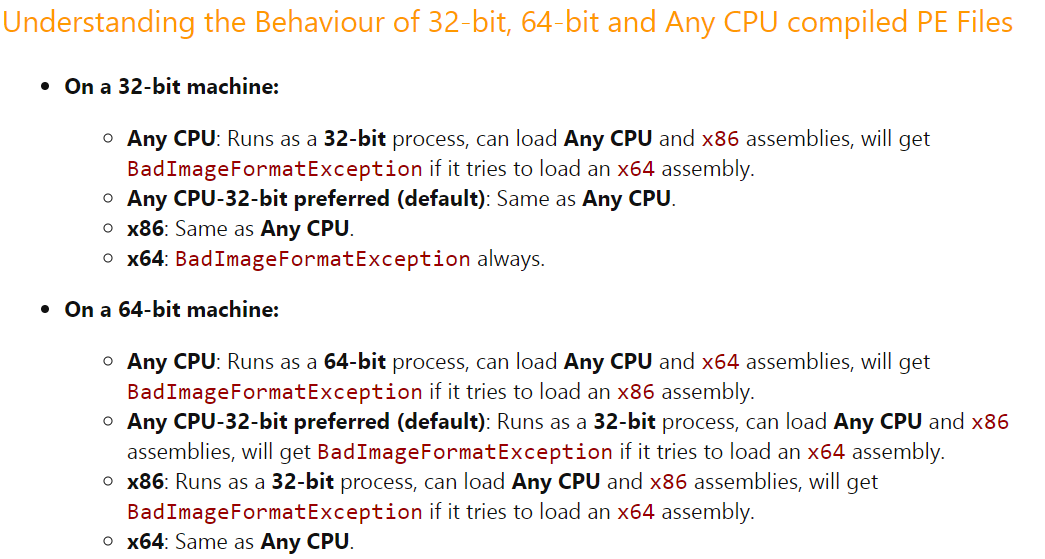
I think most of the important stuff has been said, but I just thought I’d add one thing: If you compile as Any CPU and run on an x64 platform, then you won’t be able to load 32-bit DLL files, because your application wasn’t started in WoW64, but those DLL files need to run there.
If you compile as x86, then the x64 system will run your application in WoW64, and you’ll be able to load 32-bit DLL files.
So I think you should choose “Any CPU” if your dependencies can run in either environment, but choose x86 if you have 32-bit dependencies. This article from Microsoft explains this a bit:
Explanation:
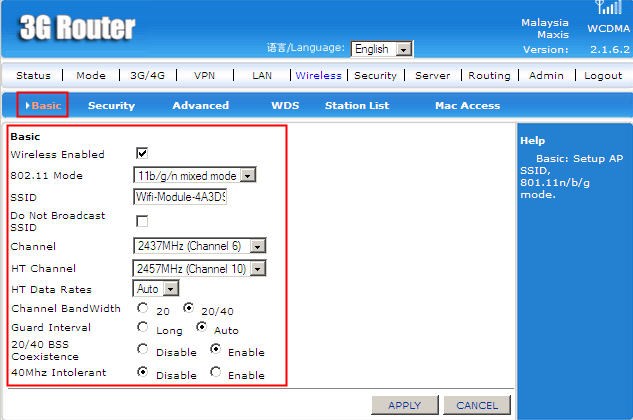
On the basic page of wireless, ‘wireless enable’ can check or uncheck. The ‘802.11’ is the Wi-Fi standards provide the wireless counterpart to Ethernet and the Wi-Fi Alliance certifies products.
The IEEE 802.11 standard have the versions 11b,11g,11n and etc.
The SSID stands for Service Set Idenfier which is the name for wireless local area network. So, the name for C60T wireless is Wifi-Module-4A3D92. It can choose to broadcast SSID or not.
The every channel shows the differences frequency using IEEE 802.11 protocols.
Channel Bandwidth have 20MHz or 40MHz and the purpose is for the actual throughput.
Guard interval is the space between symbol (characters) being transmitted. It is to avoid an interference among them.
The 20/40 BSS Coexistence is enabled due to on the performance of wireless local area network.
(source: http://www.pcmag.com/encyclopedia/term/37204/802-11 , https://en.wikipedia.org/wiki/List_of_WLAN_channels, http://wifijedi.com/2009/02/11/how-stuff-works-short-guard-interval/ , http://ojs.academypublisher.com/index.php/jnw/article/view/03075663)
Explanation:
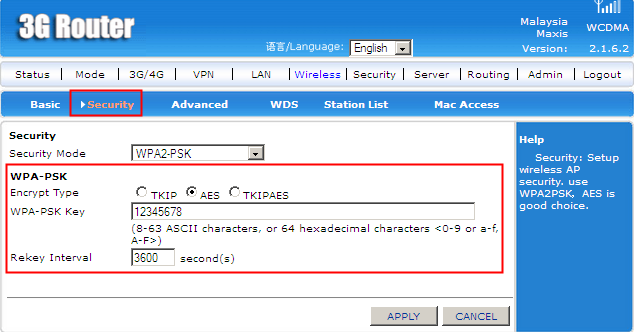
Security is need to secure the network. WPA2-PSK stands for Wi-Fi Protected Access 2 – Pre-Shared Key or Personal, it is a method of securing the network using WPA2 with the use of the optional Pre-Shared Key (PSK) authentication, which was designed for home users without an enterprise authentication server.
(Source: http://www.webopedia.com/TERM/W/WPA2_PSK.html)
WPA-PSK have three types of encrypt. First, TKIP (Temporal Key Intergrity Protocol) is an encryption protocol that was designed to provided secure encryption in wirelss local area network. Second, AES (Advanced Encryption Standard) is a symmetric-key block cipher algorithm and U.S. government standard for secure and classified data encryption and decryption. Lastly, TKIPAES is the combination of TKIP and AES whiich allow you to run mixed system.
WPA-PSK Key need to fill in to secure the wireless network and rekey interval is the the default time of 3600 seconds.
(source: http://searchmobilecomputing.techtarget.com/definition/TKIP, https://www.techopedia.com/definition/1763/advanced-encryption-standard-aes)
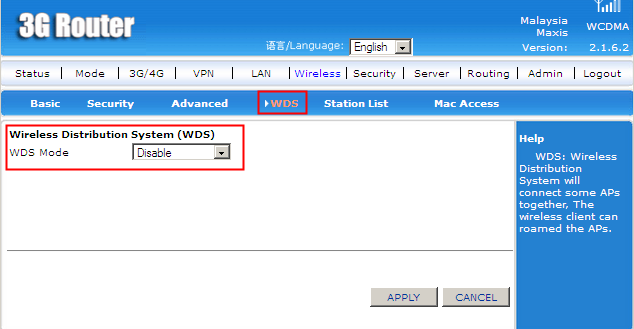
Explanation: A wireless distribution system (WDS) is a system enabling the wireless interconnection of access points in an IEEE 802.11 network. It allows a wireless network to be expanded using multiple access points without the traditional requirement for a wired backbone to link them.
(source: https://www.google.com/search?q=Wireless+Distribution+System&ie=utf-8&oe=utf-8)
Explanation:
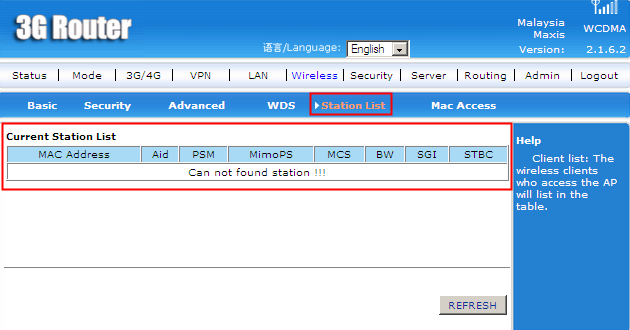
Current Station List shows all the wireless clients who access the Access Point.
Explanation:
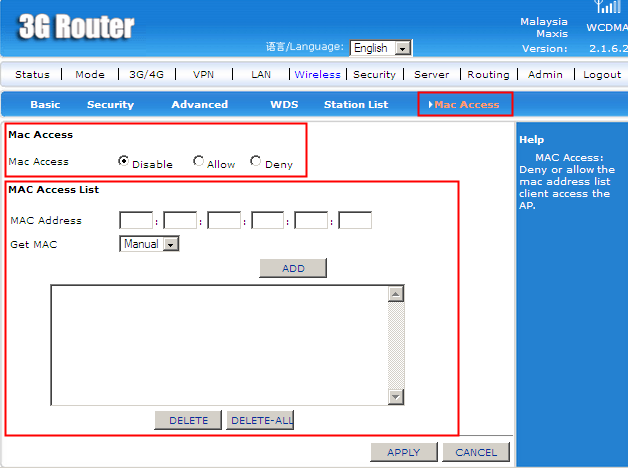
Mac Access can set either to disable, allow, or deny. If allow or deny is choose, enter the mac address on the MAC Access list to allow or deny that mac address of client to access the AP.
Explanation:
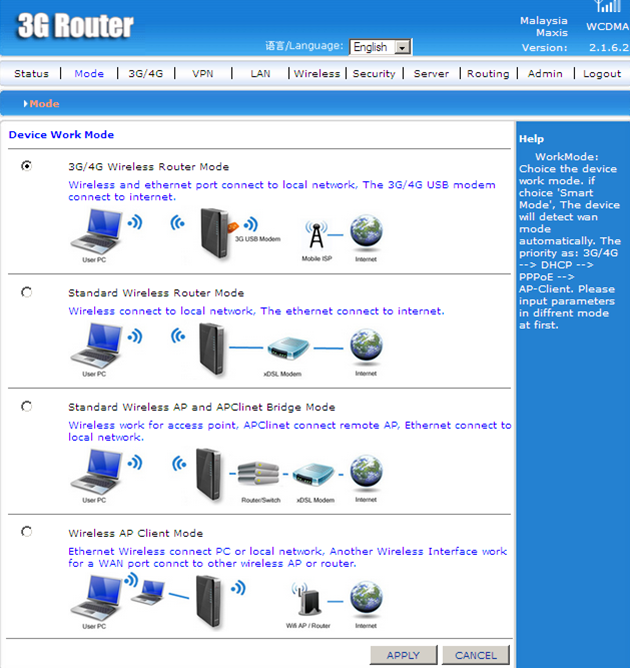
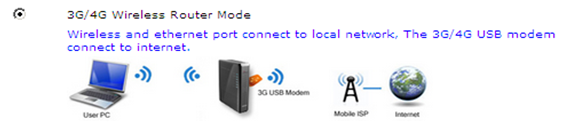
The 3G/4G Wireless Router Mode is selected for device work mode. Just in case, the C60T connected to Local Area Network (LAN). The 3G/4G connect to the Internet through a mobile ISP which is Maxis. For the WAN connection, the mobile ISP (Maxis) is the gateway to access the Internet.
Explanation:
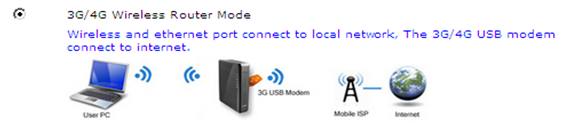
The 3G/4G Wireless Router Mode is selected for device work mode. Just in case, the C60T connected to Local Area Network (LAN). The 3G/4G connect to the Internet through a mobile ISP which is Maxis. For the WAN connection, the mobile ISP (Maxis) is the gateway to access the Internet.
Explanation:
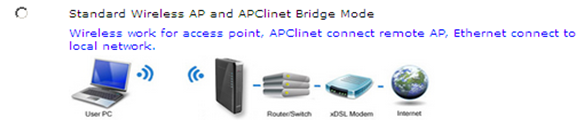
The third mode is Standard Wireless AP and APClient Bridge Mode. This figure is same like the figure number two. For the AP Client bridge mode, it connect to a wireless network and share the connection to its client on WAN side. When the wireless station limits the number of clients or asks username/password to connect, AP Client is what you need.
(source: http://www.tp-link.us/faq-442.html)
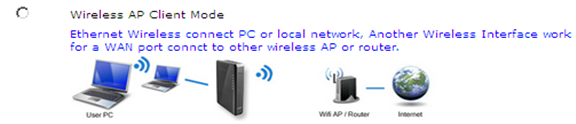
Explanation:
The last mode is wireless AP Client. The Ethernet wirelessly connected to PC or local network. The client’s PC can access the Internet. There also another wireless interface work for a WAN port connected to other wireless AP or router.
(source: http://www.tp-link.us/faq-442.html)
Thank you for helping keep Wikipedia online and ad-free. I’m sure you’re busy, so I’ll get right to it. We need your help again this year.
Please help us forget about fundraising and get back to improving Wikipedia.
We are the small non-profit that runs one of the top websites in the world. We only have about 200 staff but serve 450 million users, and have costs like any other top site: servers, power, programs, and people.
Wikipedia is something special. It is like a library or a public park. It is like a temple for the mind, a place we can all go to think and learn.
To protect our independence, we’ll never run ads. We survive on donations from our readers. Now is the time we ask.
If Wikipedia is useful to you, please take one minute to keep it online and ad-free another year.